Zero-waste Nomads:
An experiential vision for 2050
Role
UX & UI Designer
Tools
Figma
Unity
Duration
3 months
Team
Researcher
Project Manager
Developer

UX & UI Designer
Figma
Unity
3 months
Researcher
Project Manager
Developer
This was a speculative design project developed during a five-week collaboration with product and brand designers at SVA. Set in the year 2050, the collective explored how climate change, urban migration, and sustainability would reshape how people live — particularly in megacities.
My role was to design a VR experience that empowers users to design and personalize their homes before relocating — with sustainability, adaptability, and emotional well-being in mind.
In 2050, mobility is the norm and space is limited. People frequently relocate for work or community, and housing must evolve to support a flexible, low-waste lifestyle. This project imagines a future where citizens like Nina, a young professional moving to the New York Megapolis, use VR to design and adapt their homes based on:
Through this system, users can visualize their living space before arrival, customize it to suit their lifestyle, and make sustainable choices backed by a shared material economy.

Nina is relocating from Minneapolis to New York to advance her career. She needs a living space that’s adaptable, affordable, and sustainable, while also supporting her client-facing work:
Using the VR platform, Nina is able to:

From Minneapolis, Nina begins planning her move using the VR system.

She enters a virtual environment to design her new home layout.

Upon arriving in New York, she adapts her living quarters to fit her current needs.

For client sessions, Nina tailors her environment based on biometric profiles and contextual mood data.
The project drew from multiple domains:
In-VR communication lets users consult with neighbors, local circular economy hubs, or design assistants — building a community-driven approach to space design


Every item in Nina’s space is connected to a Usage Assistant — an AI that tracks how often and how well she uses each object.
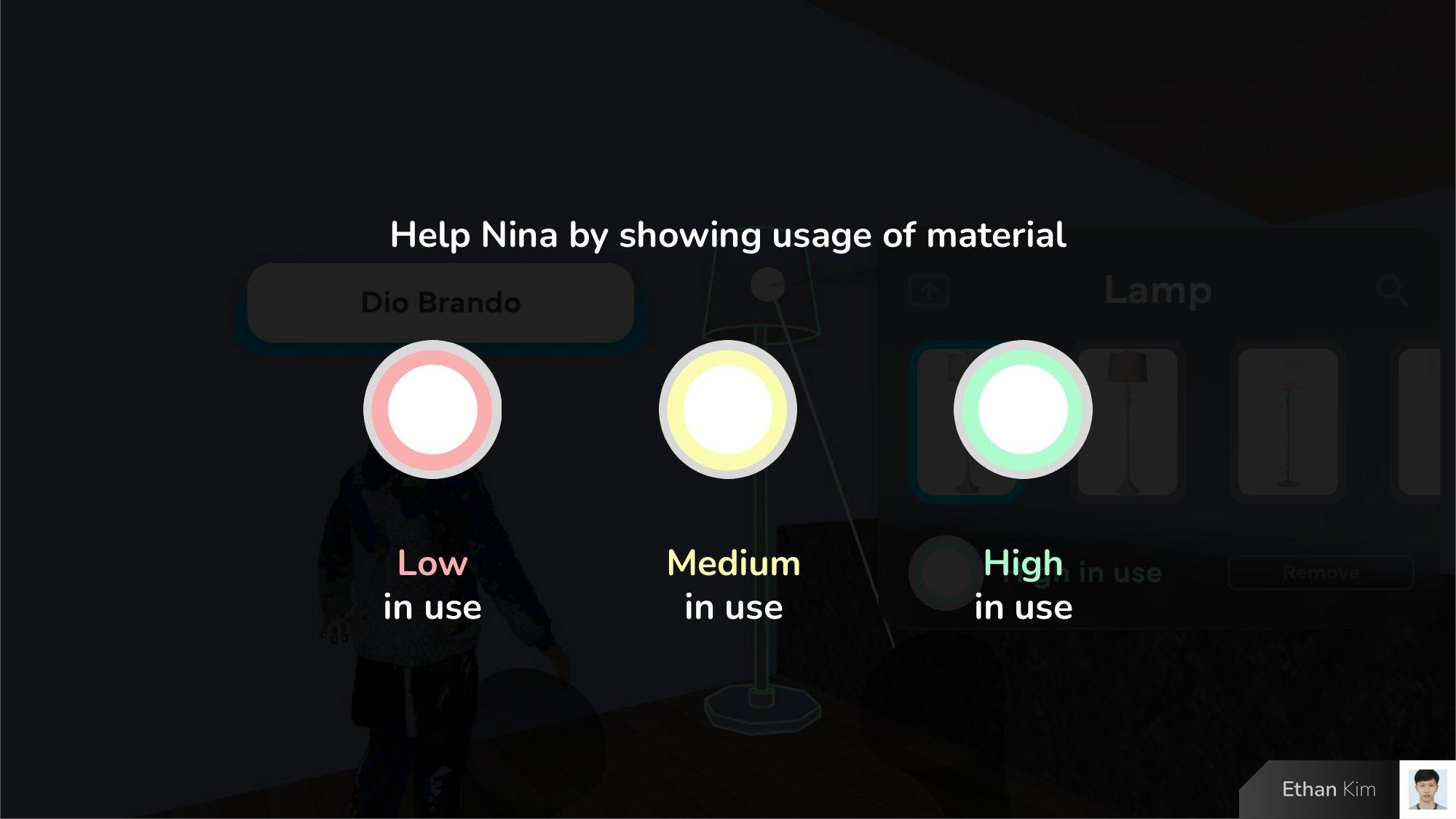


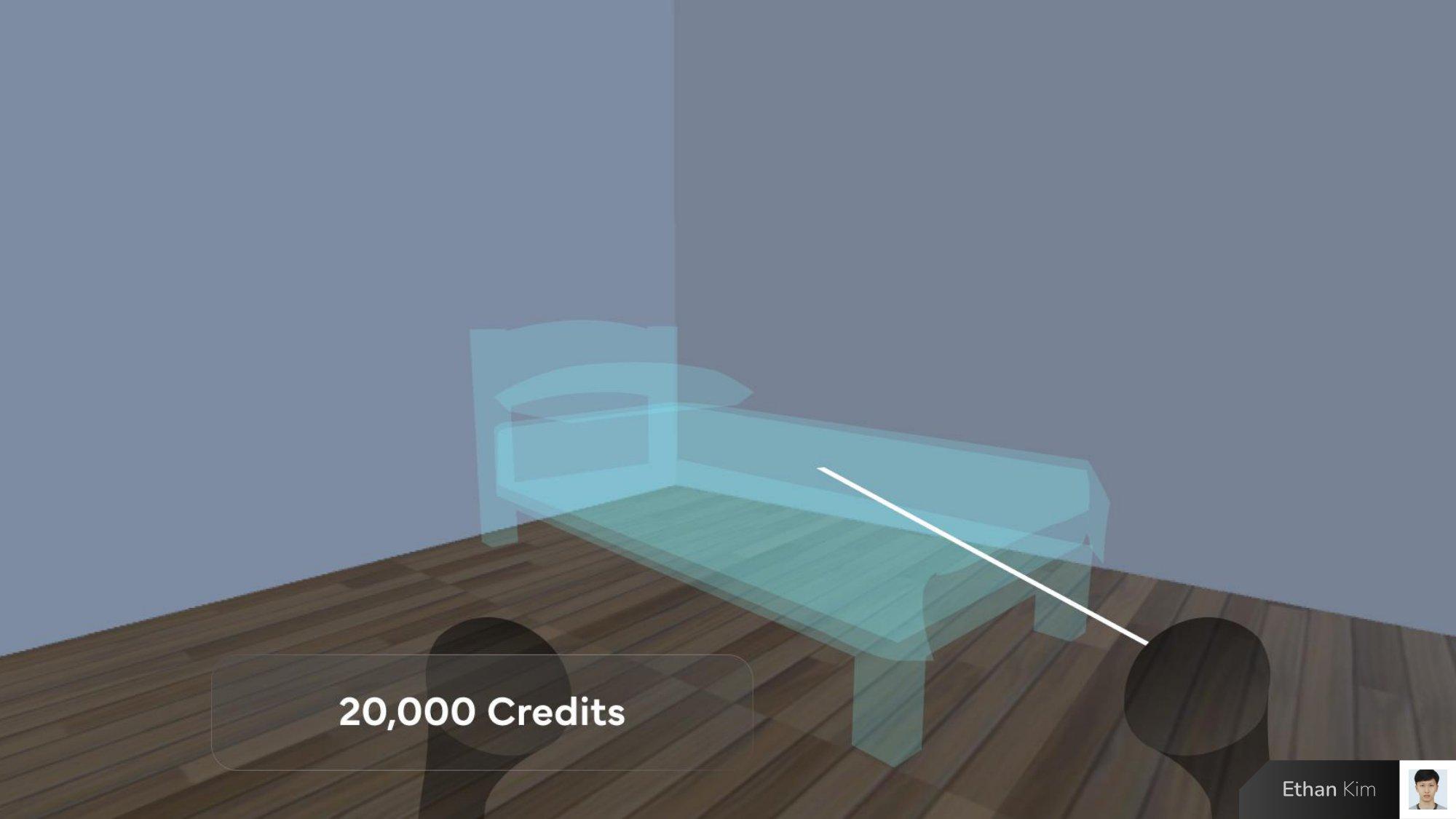
Furniture and materials come with environmental scores. Users earn and spend “recycle credits” by opting for low-impact or reused components — promoting conscious consumption.

Users create home layouts by arranging modular walls, lighting, and furniture — all sourced from a sustainable material bank.


Design as Feedback Loop
The concept of tracking usage and returning unused items introduced a circular mindset to UI — where every interaction has material implications
Emotionally and Ecologically Responsive UX
This project taught me how to balance personal comfort and planetary sustainability through adaptive design.
Social VR as a Tool for Empowerment
VR isn’t just for immersion — it can empower remote decision-making, collaboration, and community-driven sustainable living
Zero-Waste Nomad 2050 imagines a world where living spaces are customizable, intelligent, and accountable — adapting not only to who we are, but how we live.
Through recycle credits, usage analytics, and emotional intelligence, this project proposes a future where design isn't just aesthetic — it’s responsive, regenerative, and deeply human.


