story
The genesis of the HCAP project was a fundamental inquiry into the unmet needs of the homeschooling community, with the intent of identifying challenges that can be addressed through innovative design solutions.
The genesis of the HCAP project was a fundamental inquiry into the unmet needs of the homeschooling community, with the intent of identifying challenges that can be addressed through innovative design solutions.
The beginning of this project emerged from a critical inquiry into the unmet needs of Homeschoolers. My role extended from the conceptualization phase to the execution of the design for a platform aimed at addressing the challenges faced by homeschoolers.
I conducted extensive user research and interviews to unearth the nuanced challenges faced by homeschoolers and parents of homeschoolers. This phase served as the foundation for identifying key priorities.
Leveraging the research findings, I led the charge in crafting a user experience that streamlined the intricate processes of fulfilling requirements, obtaining Homeschoolers' feedback, and enhancing the overall development journey for homeschoolers.
Translating conceptual ideas into visually compelling interfaces, I applied a strategic visual design approach to ensure the platform's aesthetic appeal. The visual design not only aimed at providing an engaging user interface.
To bring the design to life, I engaged in prototyping activities that allowed for the validation of user flows and interactions. Prototypes served as a tangible representation of the envisioned platform, enabling iterative refinements based on validation sessions, user feedback, and continuous improvement.
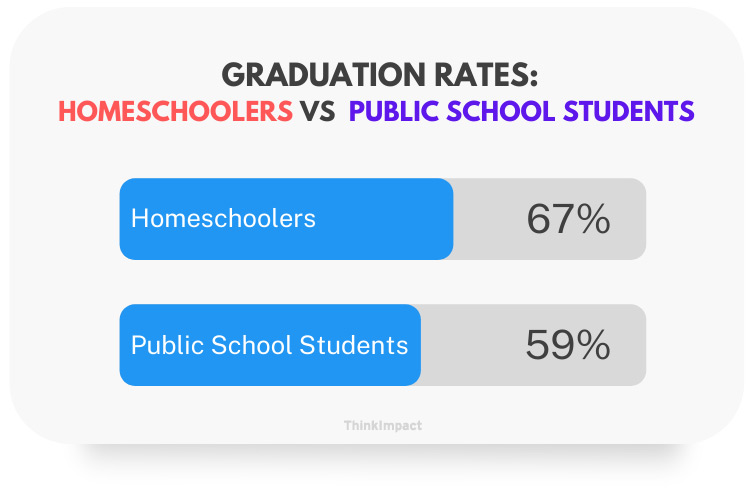
According to ThinkImpact, 67%-69% of homeschoolers go to college, and 69% of them succeed in college and adulthood. Homeschooled students perform above average on their ACTs and SATs. The average performance of homeschoolers is 22.8 out of 36 points compared to the national average of 21. Homeschoolers also have an average graduation rate of 67% compared to the 57.5% graduation rate for students from public schools.
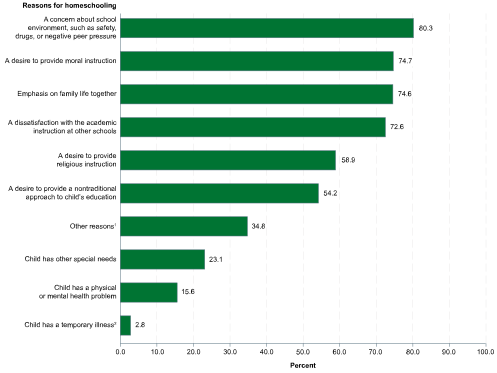
The primary reasons for homeschooling include a safe environment, individual attention, morality, discipline, proximity, academic reputation, a religious environment, class size, test scores, extracurricular activities, socialization, diversity, and school size.
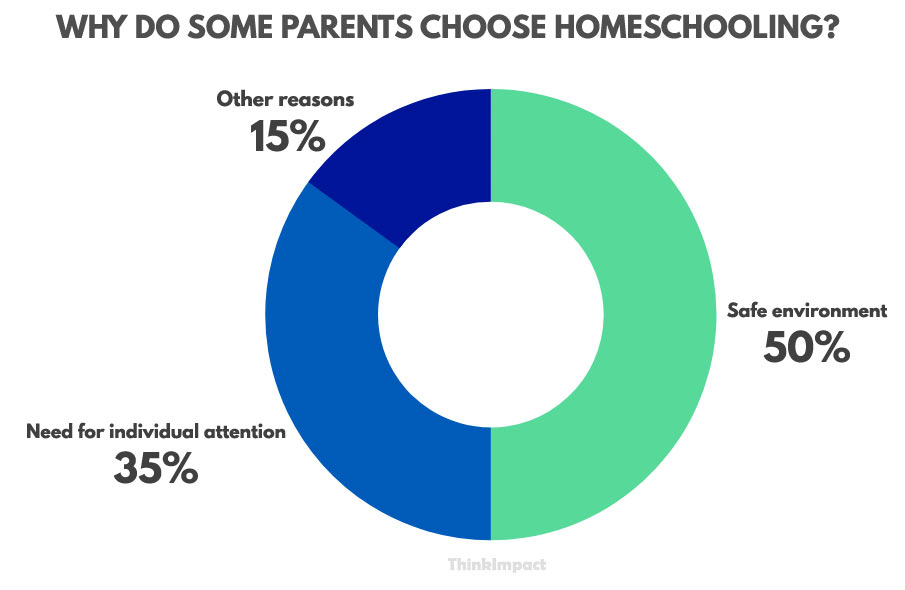
According to research(1, 2, 3), parents of homeschooling student and homeschooling worries are Social life, Education(Highschool and College), Mental and Physical health, and Career.As mentioned previously, 67% to 69% of homeschoolers go to college which lead to a thought or a question of what is the process of homeschooling applying to college. Below is the requirements of normal highschool student goes through collge application versus requirements of homeschooling student goes through college application.
Normal Highschool student:
- Education(High School Info & GPA)
- SAT/ACT
- Activities
- Portfolio(if needed)
- College essays
Homeschooling student:
- Education(in homeschooling student case, they need a transcript keep on track on their courses and education so that it gives them a proof of their education)
- SAT/ACT(970000 code for Homeschool)
- Diploma test(different based on state they’re in)
- Portfolio(if needed)College essays
- Additional requirements(e.g. Additional essay about their homeschool enviornment)
From interviews with homeschooling parents and homeschooling students and research, it is seem that the problem was parents and students struggle to keep track of the homeschooling progress while preparing for college, making it challenging to meet college requirements.

For parents and students, it is hard to keep on tracking homeschool progress as preparing for college. It is difficult to figure out what specific requirements are for homeschool students when applying to desired colleges or universities.
Allow parents and students to keep on track with their process and fulfil the requirements and specific requirements for colleges or universities.
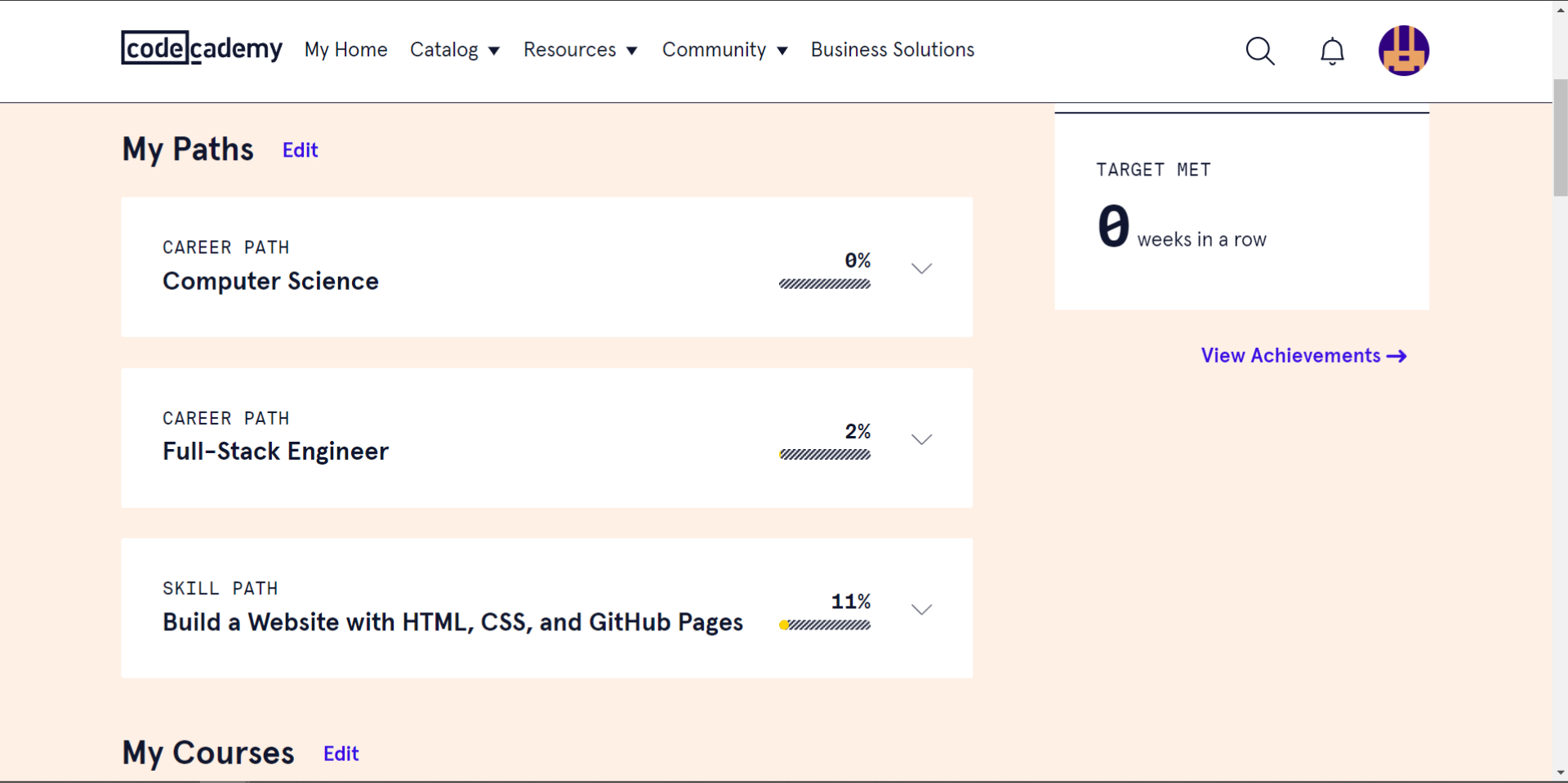
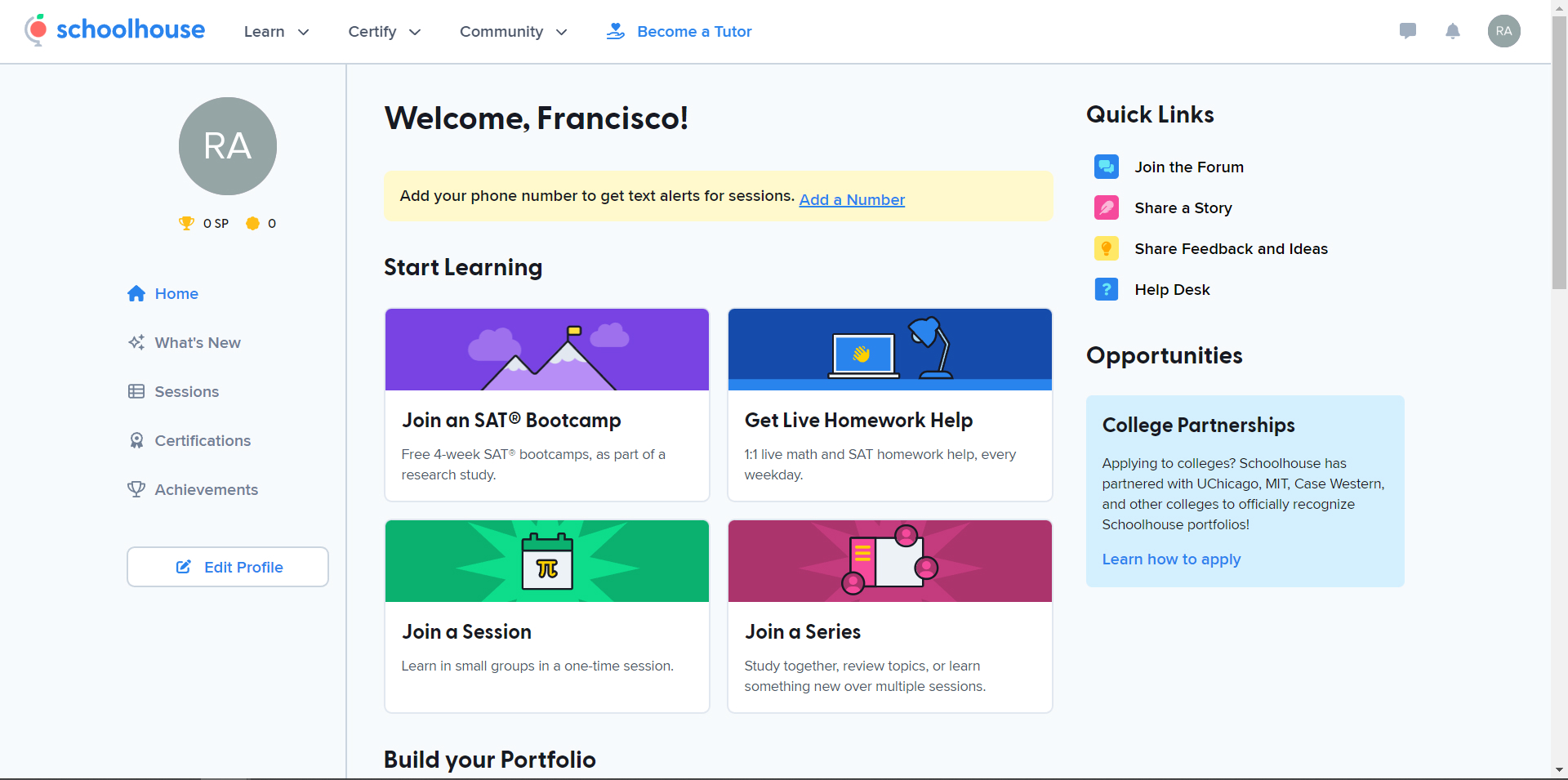
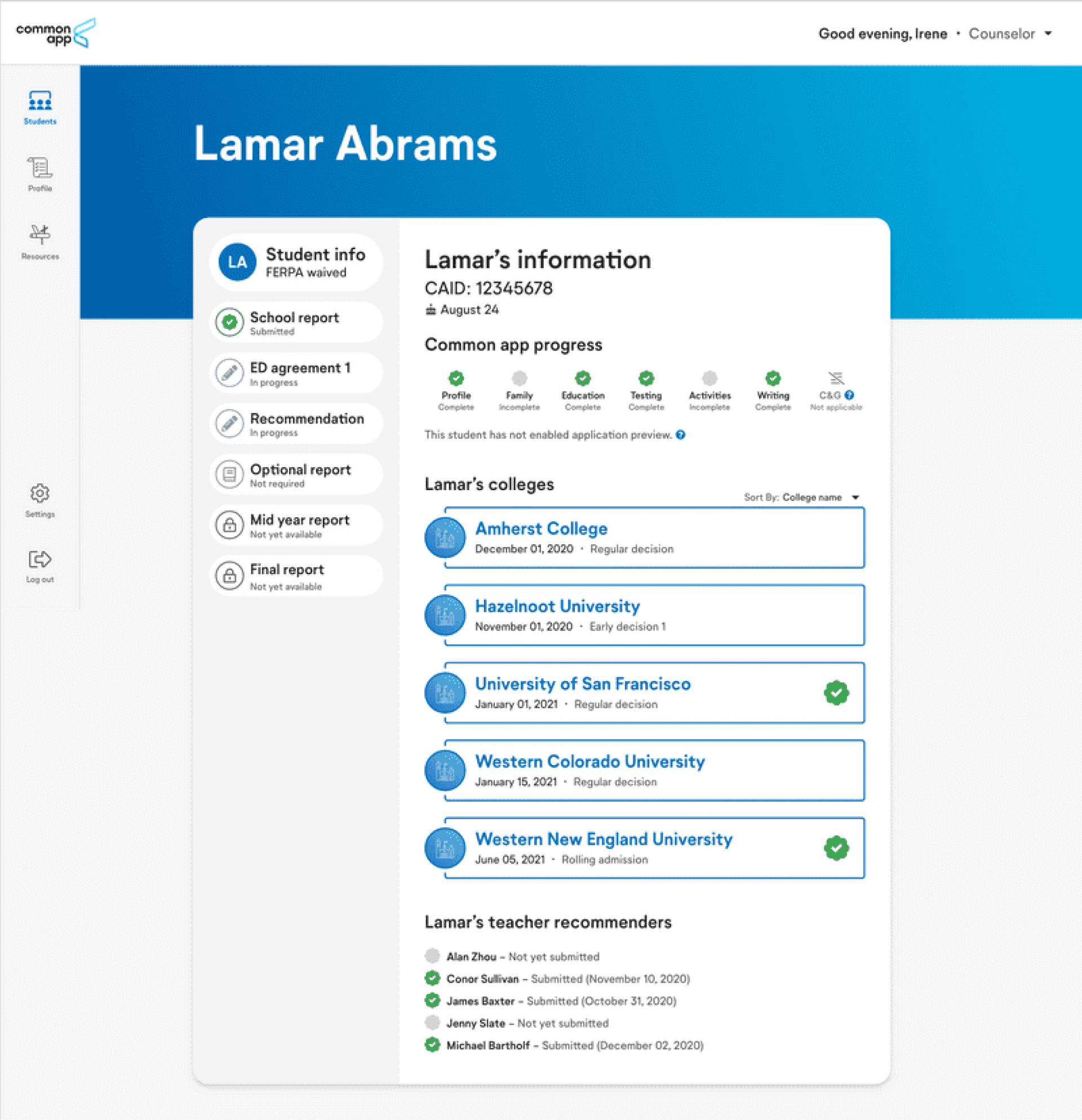
For competitive analysis, I first looked at similar platforms such as Khan Academy, Codeacademy, schoolhouse, and common app. I took away the way to group information, such as using a modular design system and a left menu bar. I gathered this inspiration and started sketching.

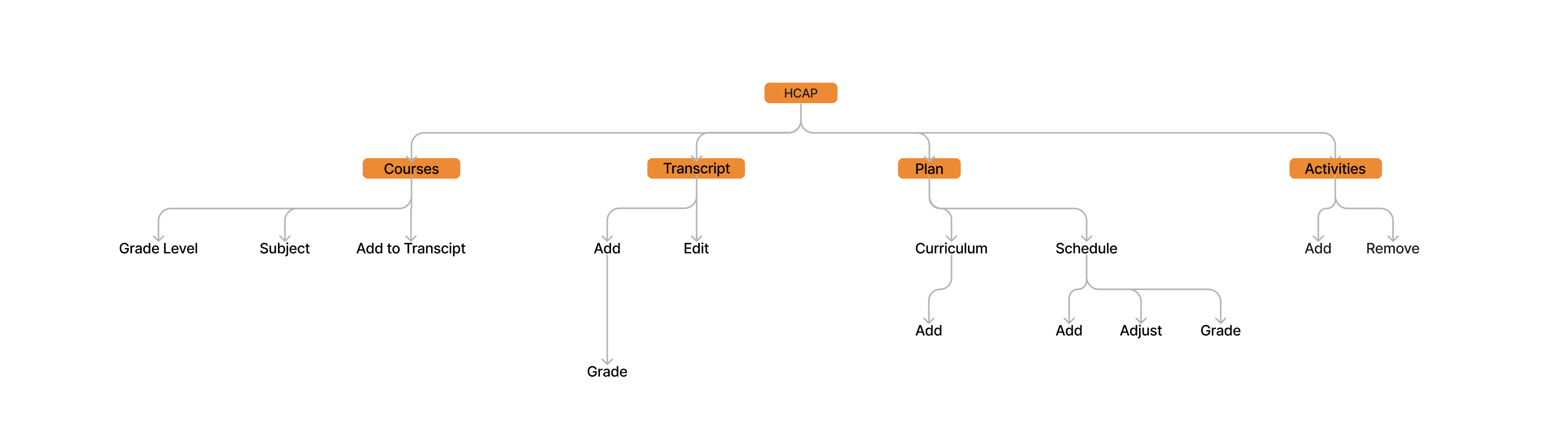
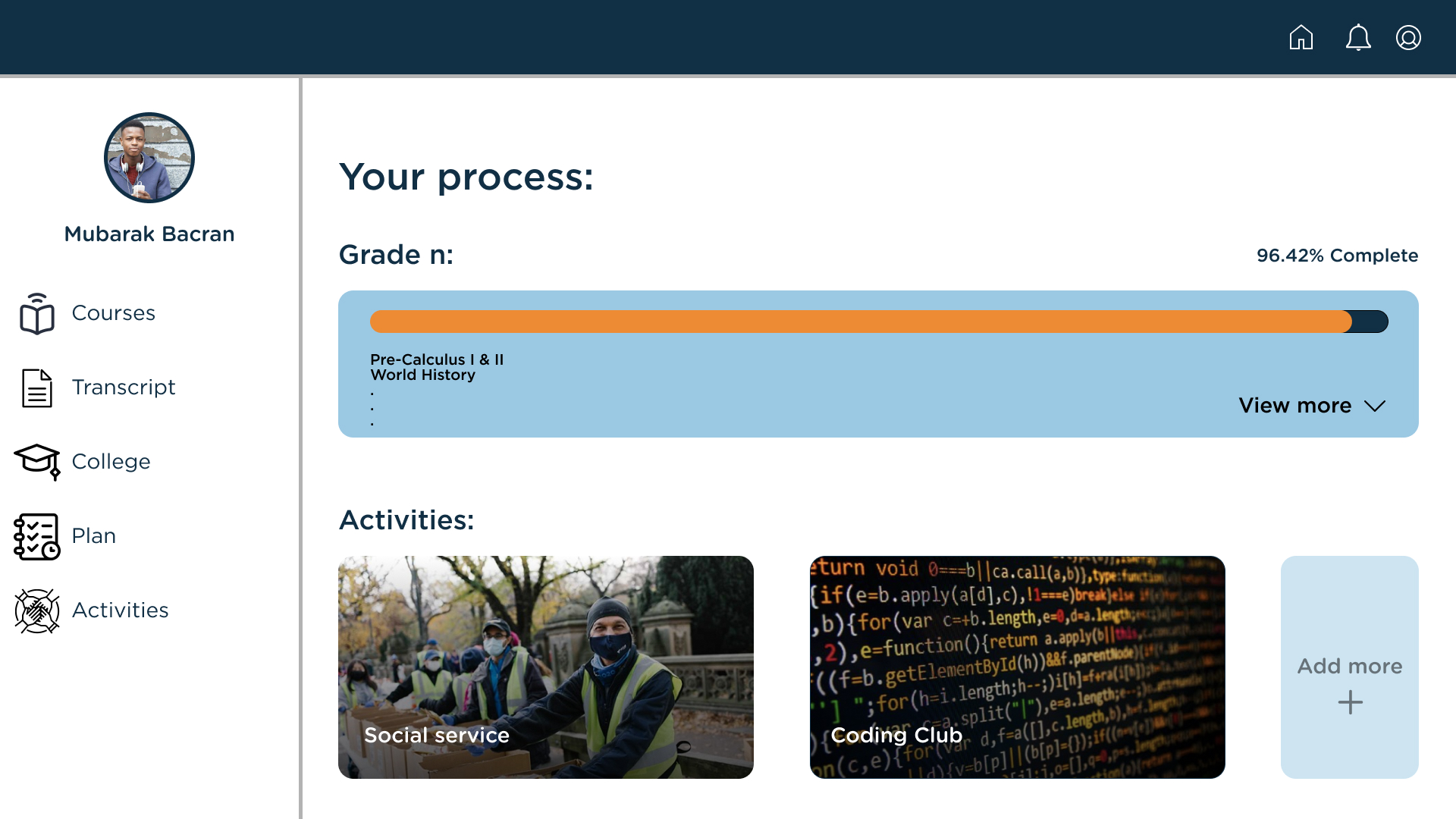

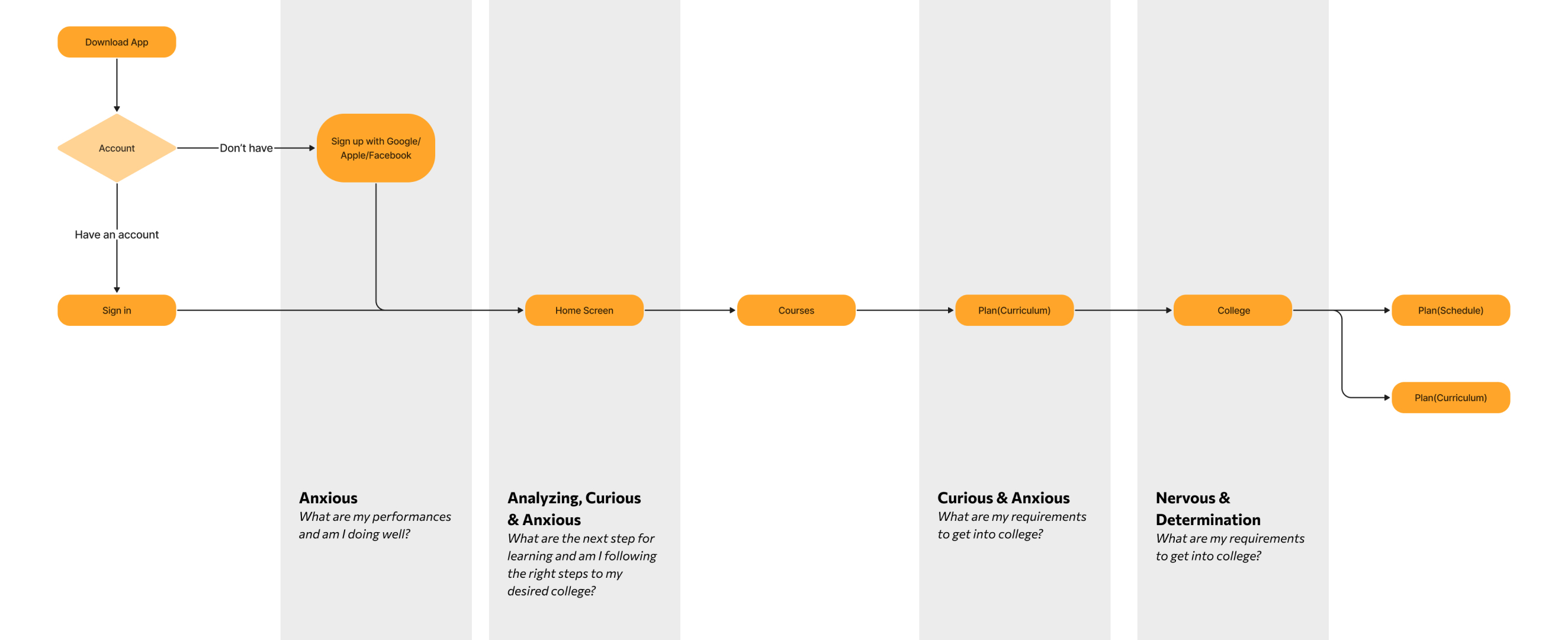
Home: The platform offers a comprehensive overview of the user's academic progress and status with regard to their college objectives. This feature allows users to gain a clear understanding of their current academic journey and the progress they have made thus far. Additionally, users can conveniently view their academic transcripts and add relevant activities or records on the home screen.
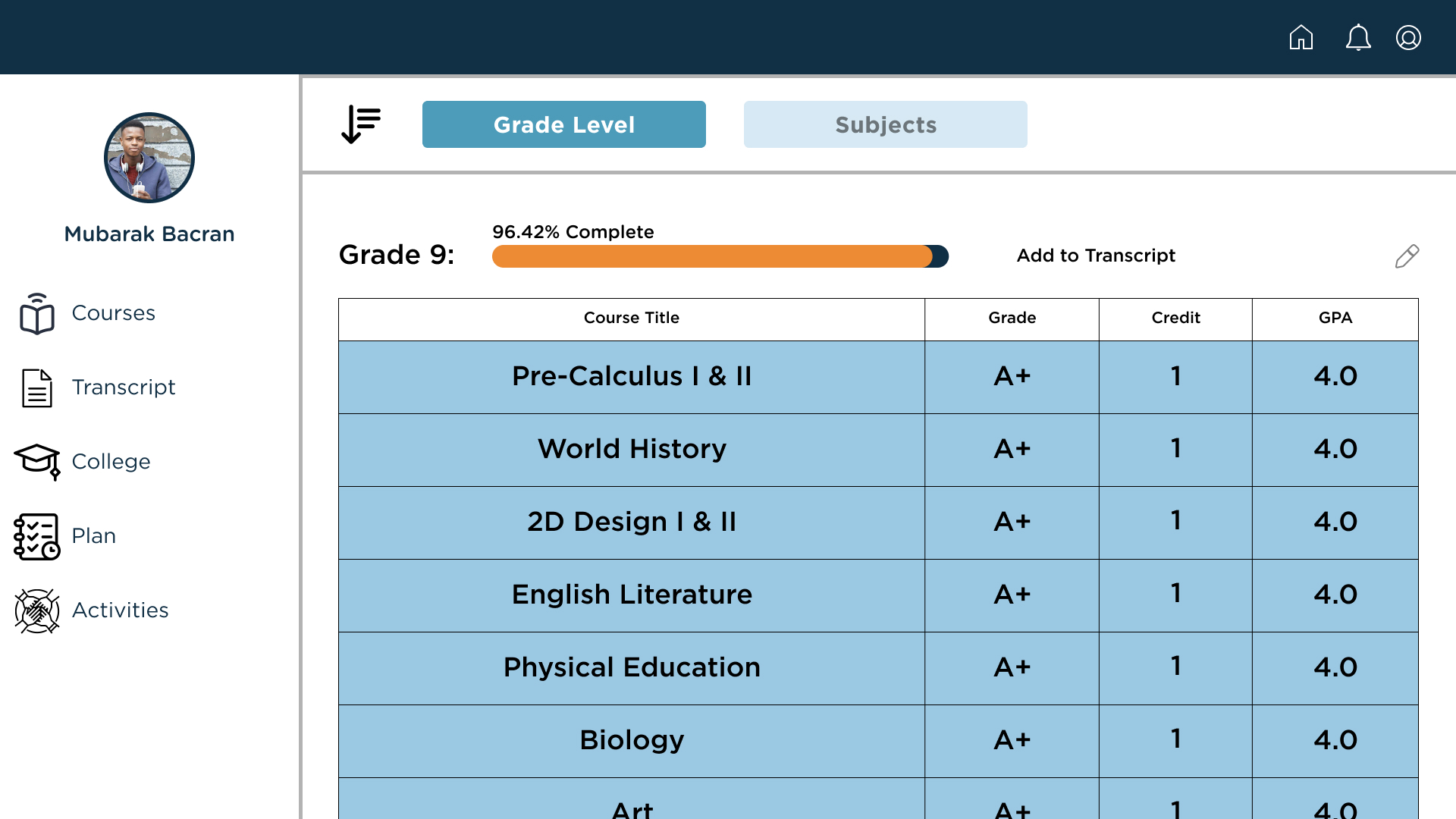
Courses: This feature provides users with an overall GPA, scores, and credit summary of their courses, including the overall percentage of progress made. The platform can display a detailed view of the courses categorized by grade levels and subjects to help users understand what they need to do to achieve their academic goals. Users can also conveniently add their GPA, scores, and credits to their academic transcripts.
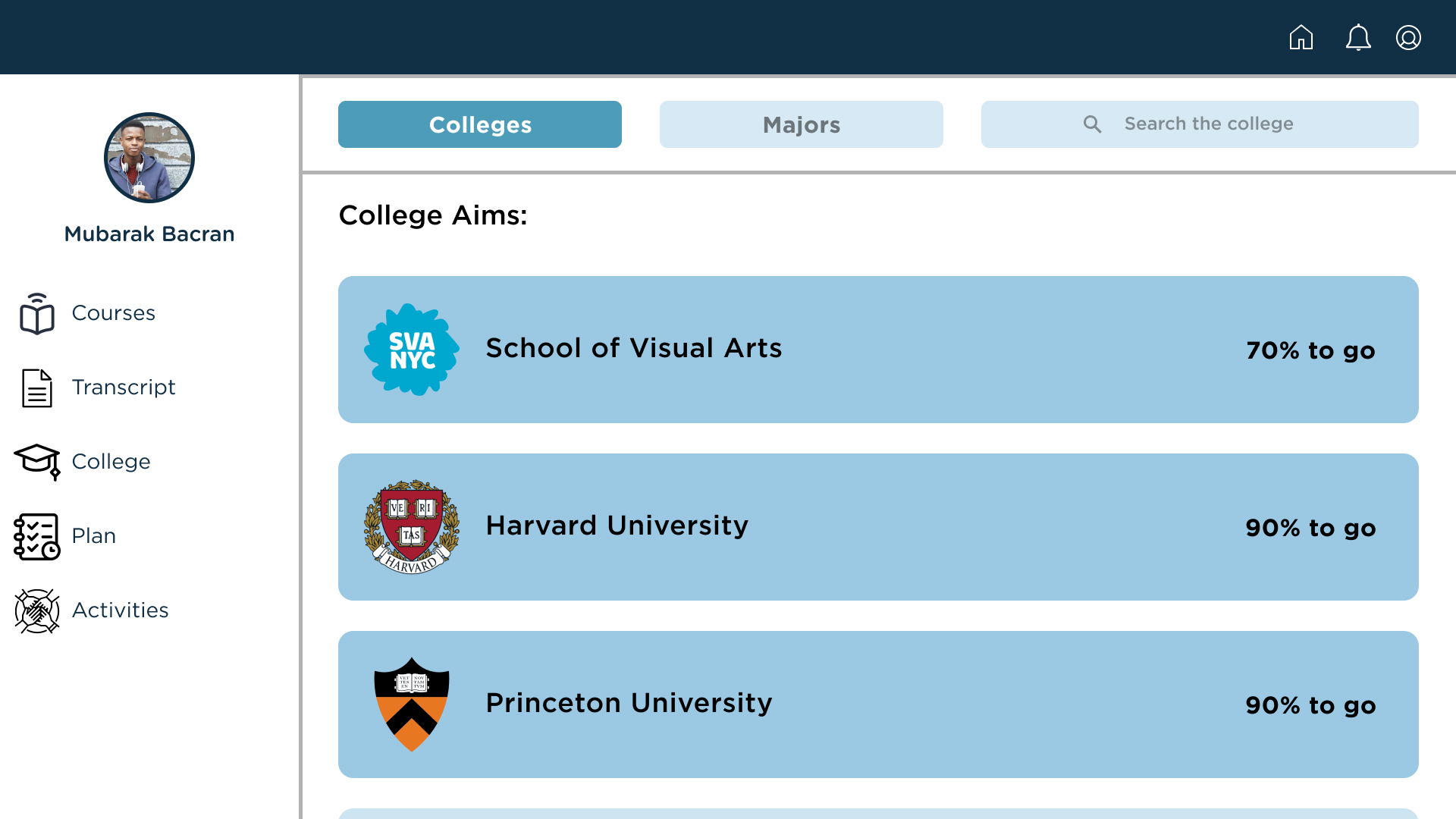

Colleges: Users can track their progress towards their college goals and check if their academic achievements meet specific college requirements through this feature. Furthermore, this feature offers valuable information on various college majors, helping users identify and choose their preferred major and college of study.
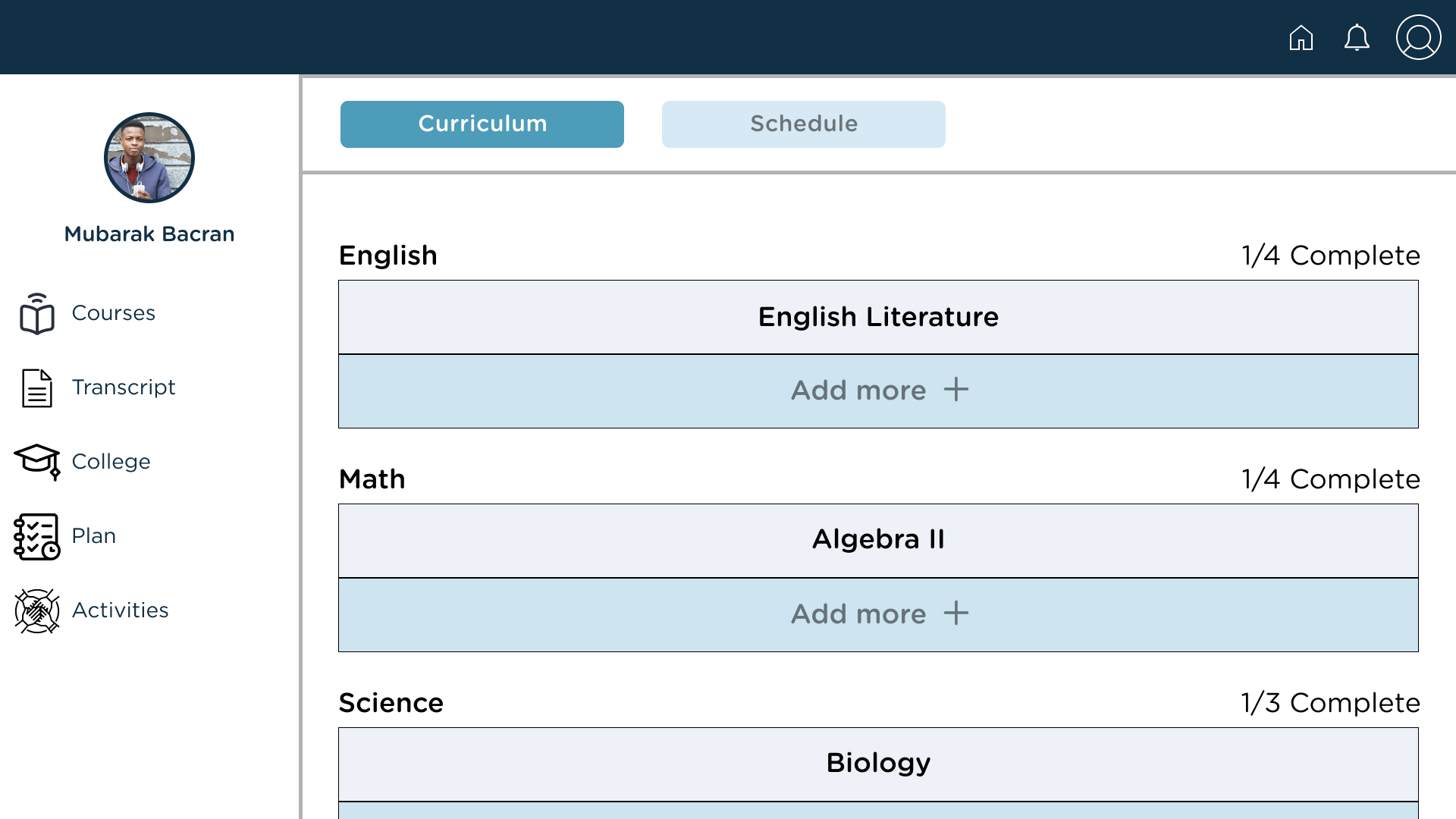
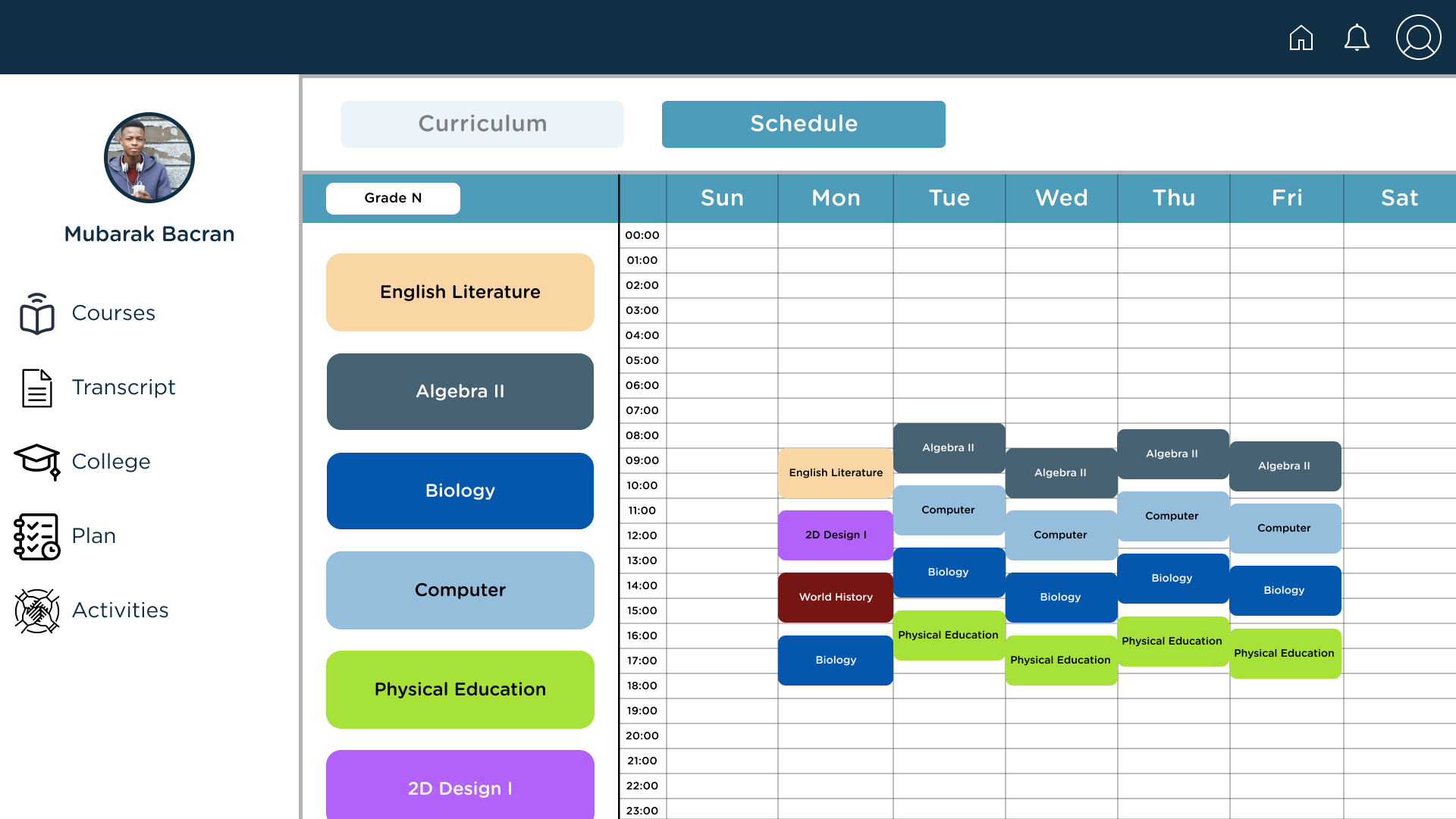
Plan: The platform offers a detailed curriculum plan that outlines the necessary courses required to achieve the user's academic goals. Additionally, users can conveniently manage and adjust their course schedules to fit their academic needs and preferences.
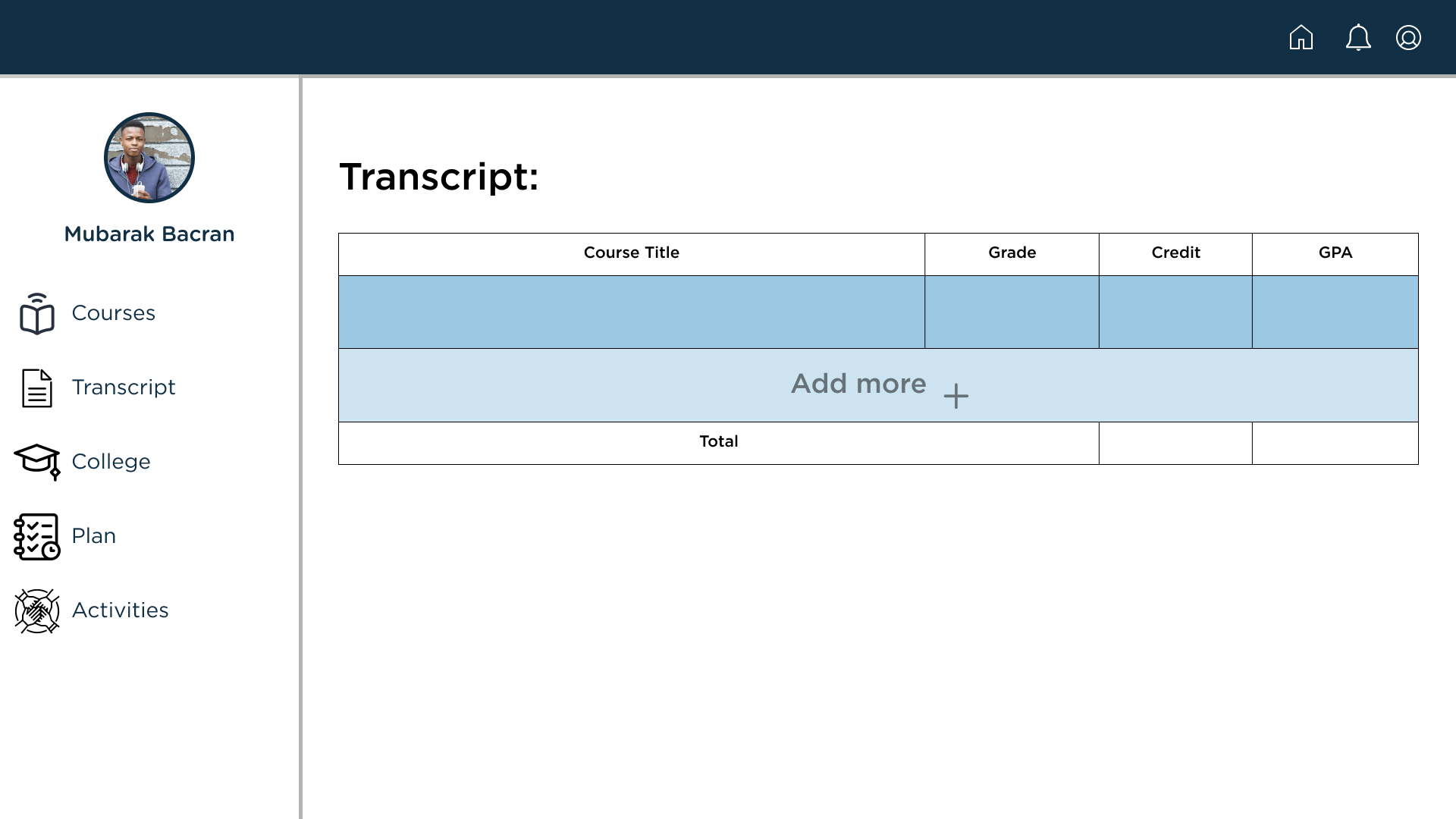
Transcript: The platform helps users to create a transcript and add courses they have been taking or taken.


Notification system so that it keeps remind or helps user to take their courses or add courses to transcript.